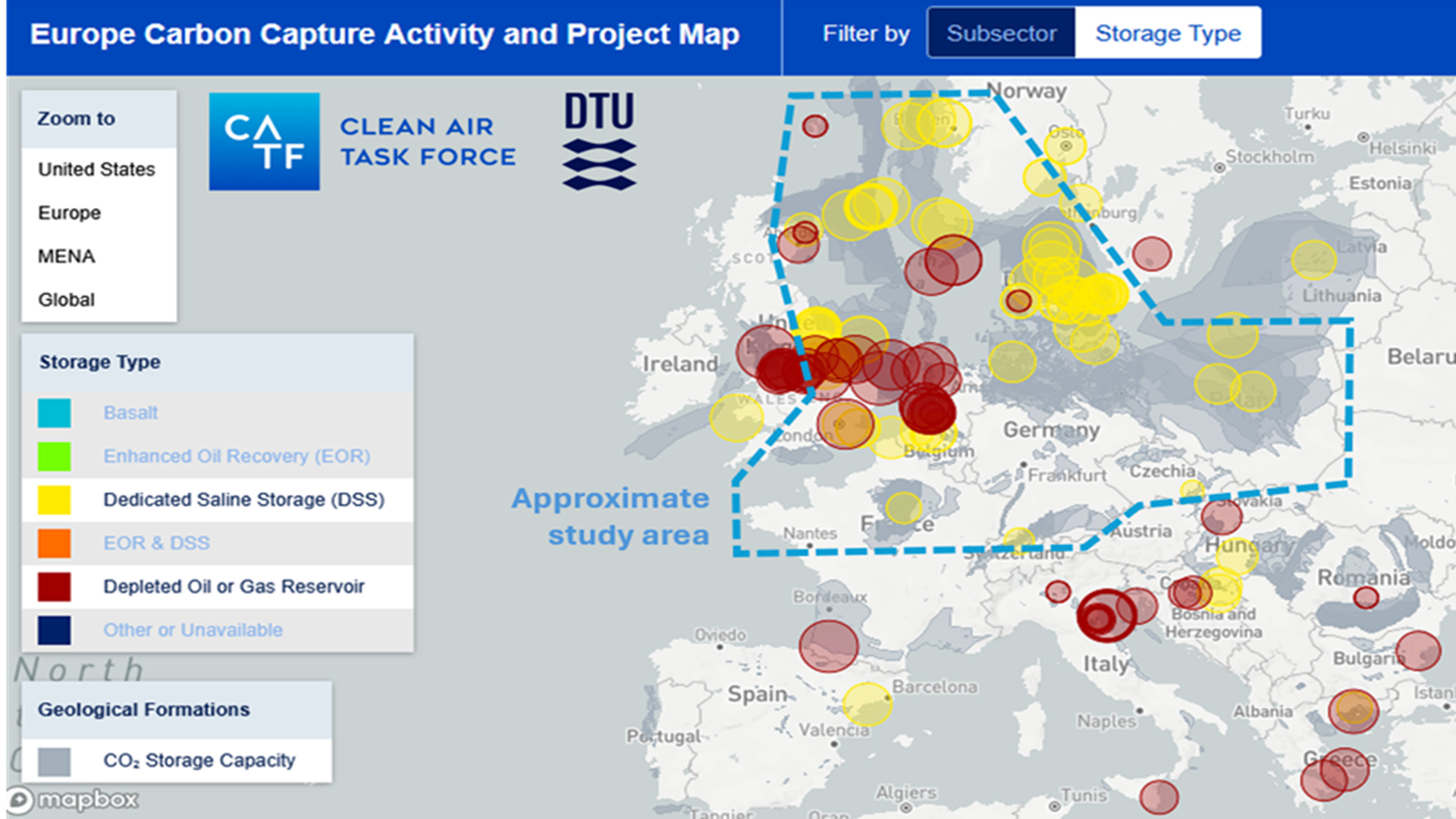
The study moves beyond ‘organic growth’ models - which often lead to fragmented, high-cost solutions - to support a rationally planned, multimodal network. By coordinating infrastructure today, we can future-proof and lower the cost of a network that connects our hardest-to-abate industries to safe storage.
The study isn't just looking at one solution; it’s optimising a massive, multimodal web of infrastructure, including pipelines, shipping, rail and road for maximum flexibility, with strategic hubs that prioritise high-impact sectors like cement, lime, steel and waste-to-energy.
The research will model Northern Europe and will include all major emitters and geological storage options in that area. Scenarios will test the economic benefits of rationally planned networks (rather than uncoordinated growth), the impact of linking to major storage areas outside the EU (e.g., the UK and Norway), and compare existing licensed sites, mostly located offshore, with the potential for widespread onshore storage.
Carried out by project members Toby Lockwood and Darryle Ulama from Clean Air Task Force, with Ali A Eftekhari from DTU Sustain and Hans Horikx, the study will ultimately help quantify what the benefits are of an integrated infrastructure strategy that treats CO2 transport and storage as a unified European utility.