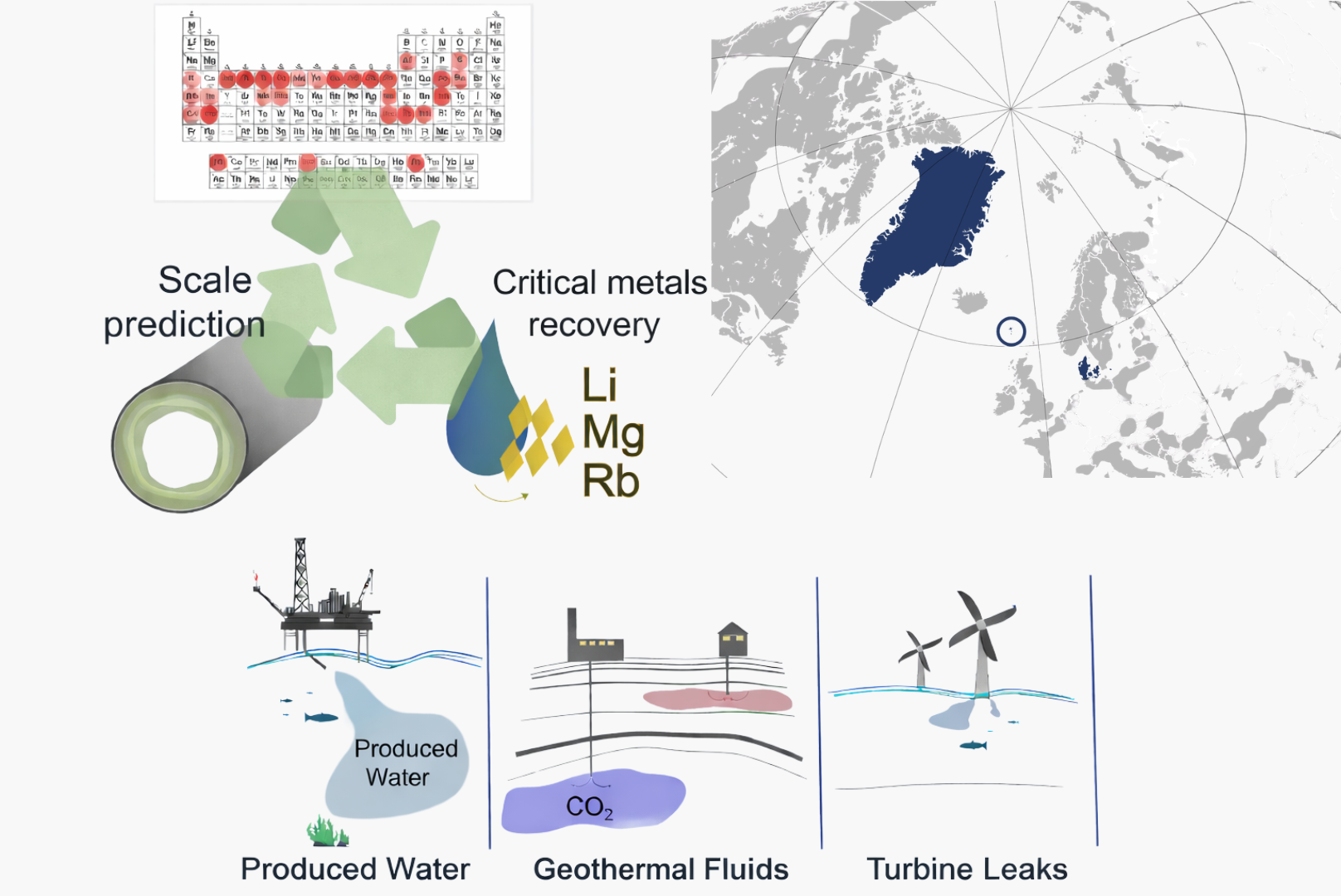
Highly saline fluids from CO₂ storage reservoirs, geothermal systems, oil and gas fields, and deep geological formations are analytically challenging. Their extreme sodium and chloride concentrations mask trace elements critical for environmental risk assessment, reservoir integrity evaluation, and resource recovery.
With this new infrastructure - combining triple quadrupole ICP-MS, ion chromatography, ICP-OES, and advanced mercury analysis - we can now:
- Quantify trace metals and metalloids in ultra-saline matrices with high precision
- Minimise matrix interference and reduce sample pre-treatment
- Detect environmentally critical elements at very low concentrations
- Characterise brine chemistry in systems that have previously been difficult to resolve
This capability supports projects related to CO₂ and gas storage, geothermal energy, nuclear waste management, critical raw materials, archaeology, and offshore wind.
We welcome collaboration with researchers, industry partners, and authorities working with high-salinity systems.
The research infrastructure is funded by The Carlsberg Foundation.