Fiber Optic Sensor for Monitoring CO₂ Near Storage Sites
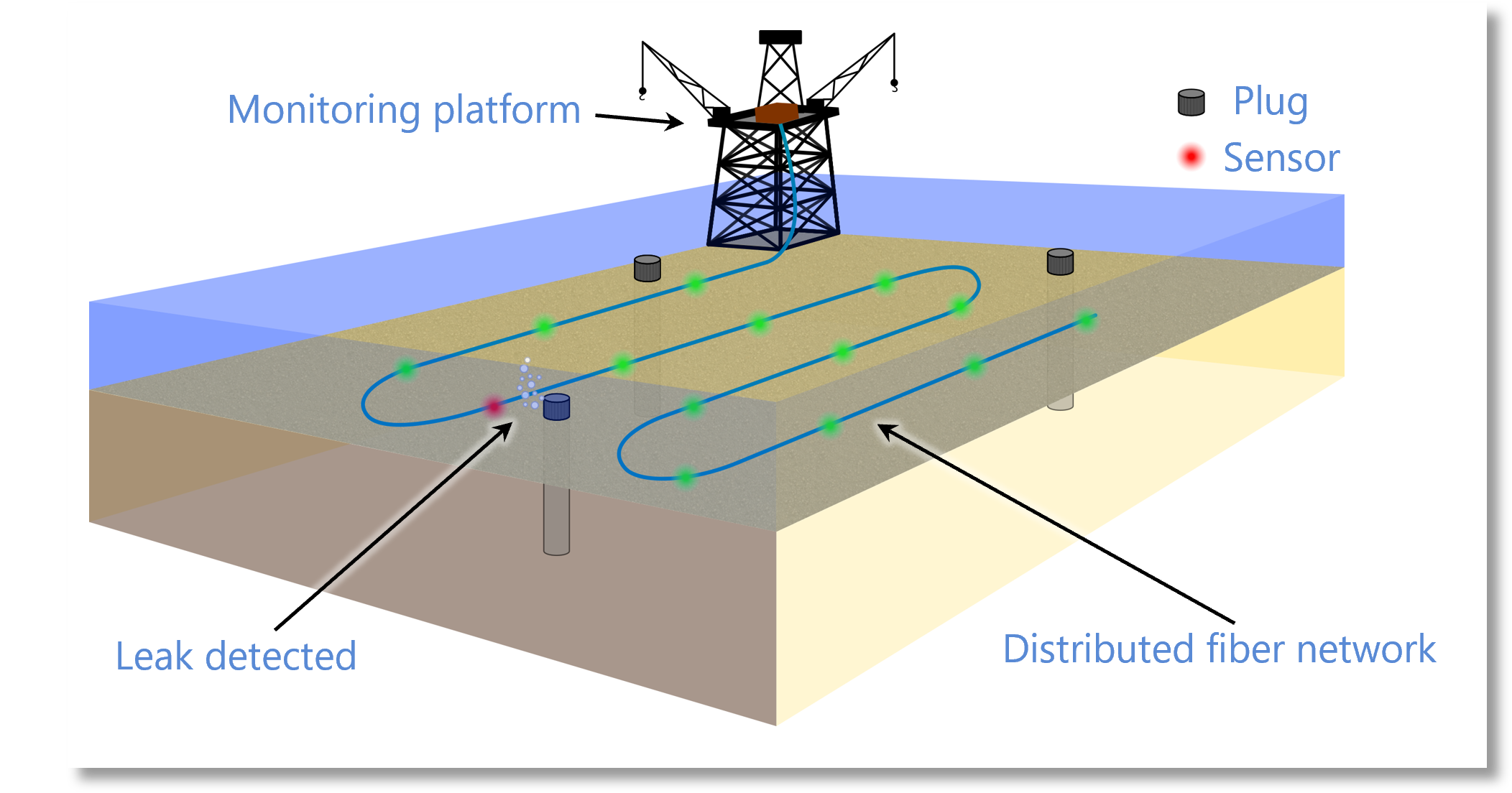
Carbon capture and storage (CCS) sites must be continuously monitored to detect any potential CO2 leakage. At DTU Offshore, we are developing fiber-optic sensing systems capable of detecting dissolved CO2 directly in the marine environment.
Carbon capture and storage (CCS) sites must be continuously monitored to detect any potential CO2 leakage. At DTU Offshore, we are developing fiber-optic sensing systems capable of detecting dissolved CO2 directly in the marine environment.
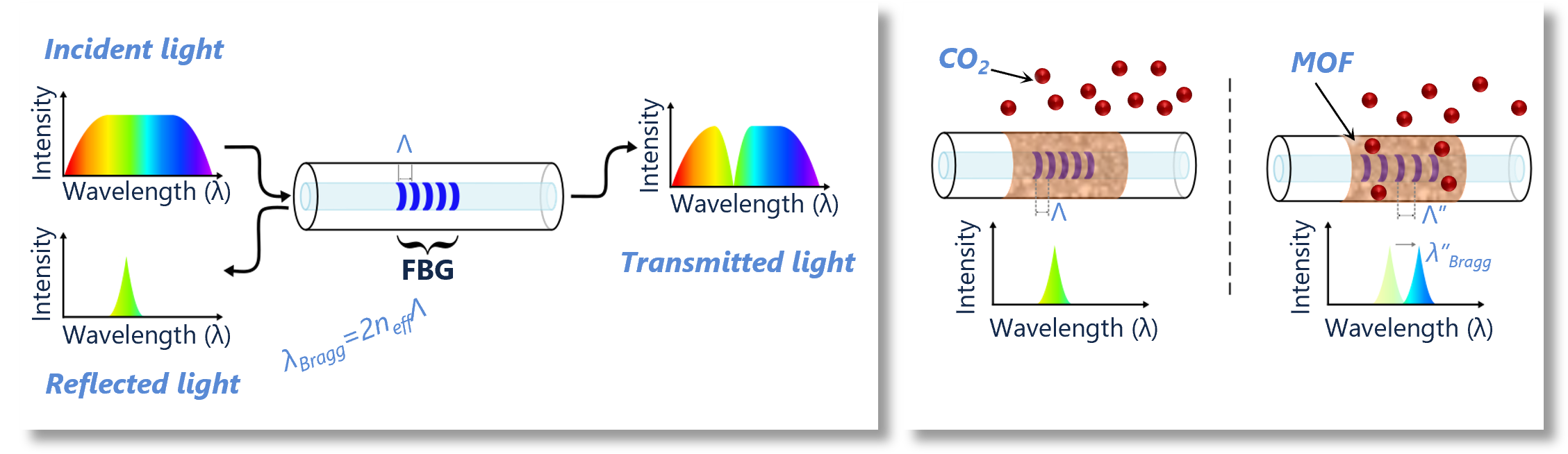
Our approach is based on fiber Bragg gratings (FBGs) – periodic refractive index modulations inscribed within an optical fiber that reflect a specific wavelength of light, based on Bragg’s condition. When the fiber experiences mechanical strain, the spacing within these gratings changes, shifting the wavelength that gets reflected. This provides an extremely sensitive and reliable method for measuring strain along the fiber.
To convert this strain sensing into chemical sensing, the FBGs are coated with a special porous material – a metal–organic framework (MOF). We choose a CO2-selective MOF that can capture CO2 molecules from water. This uptake of CO2 within the MOF produces a strain which in turn translates to a measurable strain on the underlying fiber. As the reflected wavelength form an FBG is continuously monitored, this allows for a rapid detection of CO2 with a MOF-coated FBG.