Microfluidics Insight on Oil Emulsions in the Oil Industry
Produced water from oil production often contains tiny oil droplets that are difficult to remove. By using microfluidic experiments, this study explores how droplets coalesce and how production chemicals may unexpectedly stabilise emulsions and hinder separation.
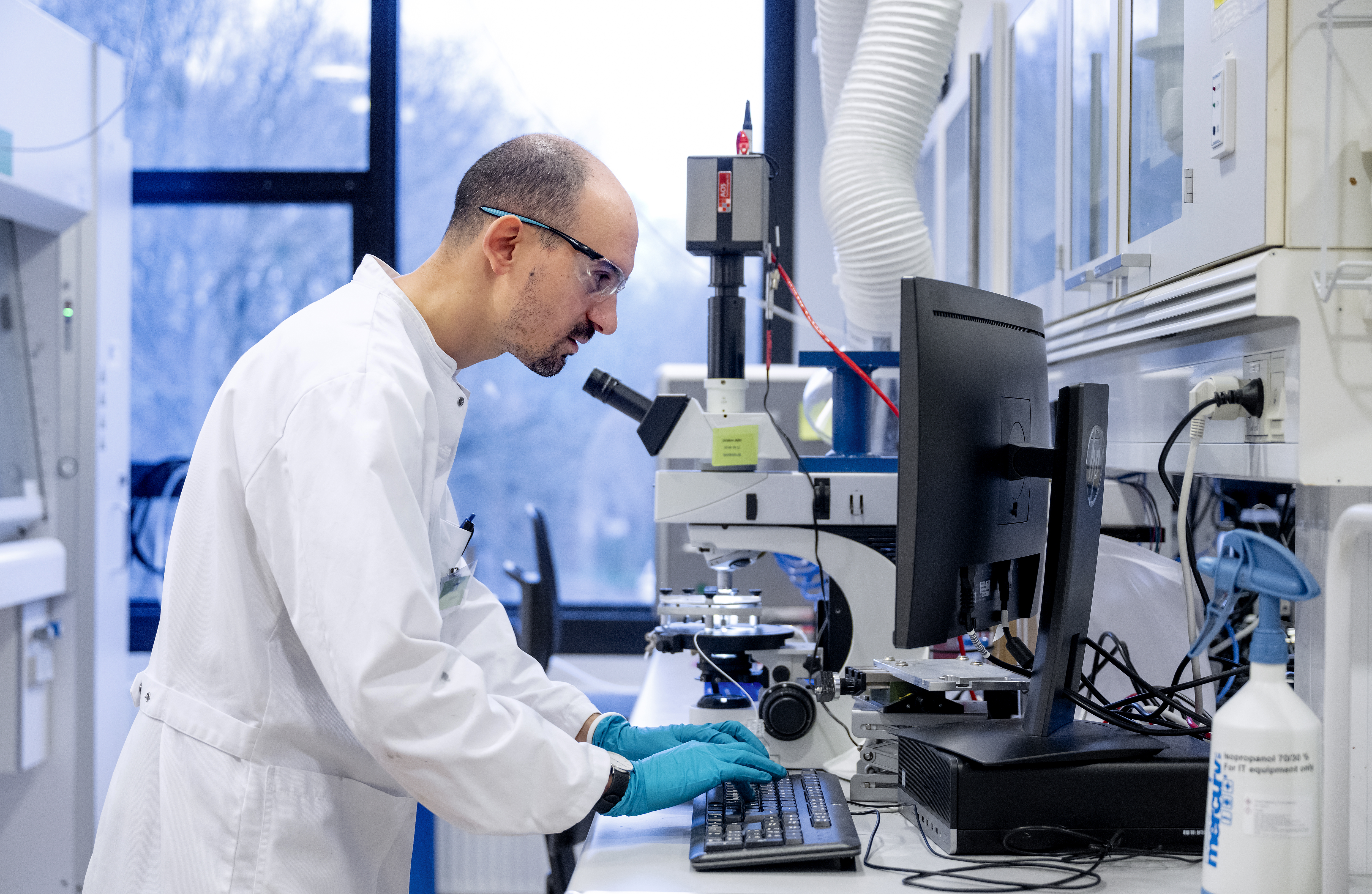
Oil production is inevitably accompanied by the production of water – known as produced water. The volumes involved are substantial: globally, around three litres of produced water are generated for every litre of oil produced. This water is either re-injected into the reservoir or discharged into the ocean if it meets environmental regulations.
A key parameter determining the quality of produced water is the concentration of oil droplets dispersed in the water, often referred to as oil-in-water emulsions. Conventional separation systems aim to remove these droplets, but very small droplets can remain in the water and may pass through the treatment process.
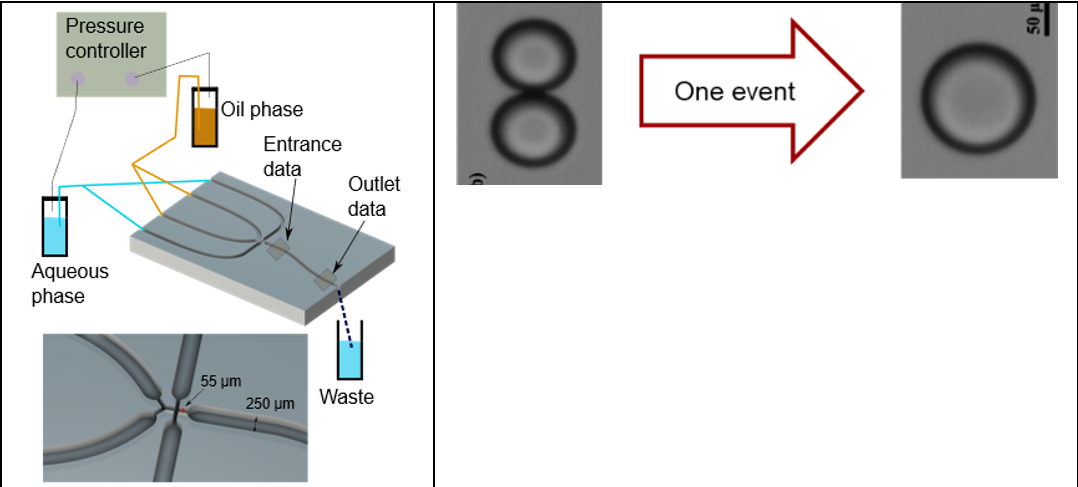
In this project, we used a microfluidic model system to investigate how oil droplets in produced water merge - a process known as coalescence (Fig. 1). Increasing the rate of coalescence allows small droplets to combine into larger ones, making them easier to separate from the water.
The microfluidic device enabled the generation of highly uniform (monodisperse) oil droplets in a continuous water phase. Using high-speed imaging, we measured how frequently droplets merged by analysing droplet interactions at the entrance and outlet of the microchannel. The experiments were conducted under different chemical conditions and dosages to replicate conditions typically found in oil field operations.
In oil production, production chemicals are routinely added to mitigate issues such as corrosion, microbial activity, souring and emulsification. However, overdosing these chemicals can have unintended consequences. In particular, they can stabilise oil emulsions and prevent droplets from coalescing.
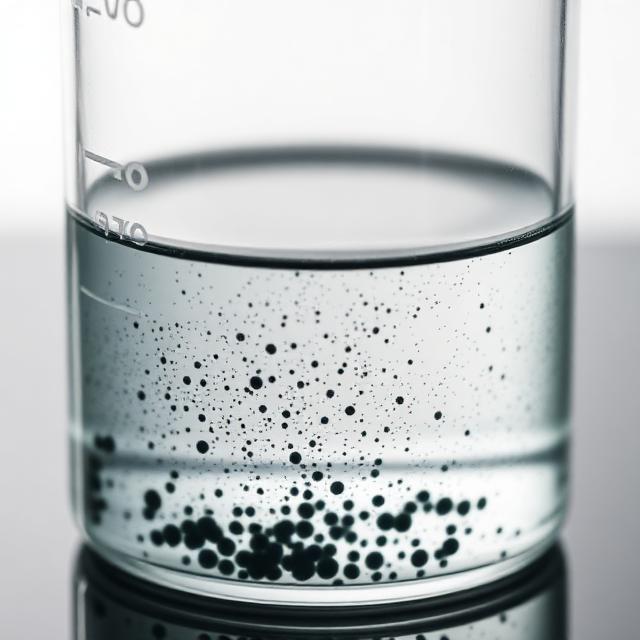
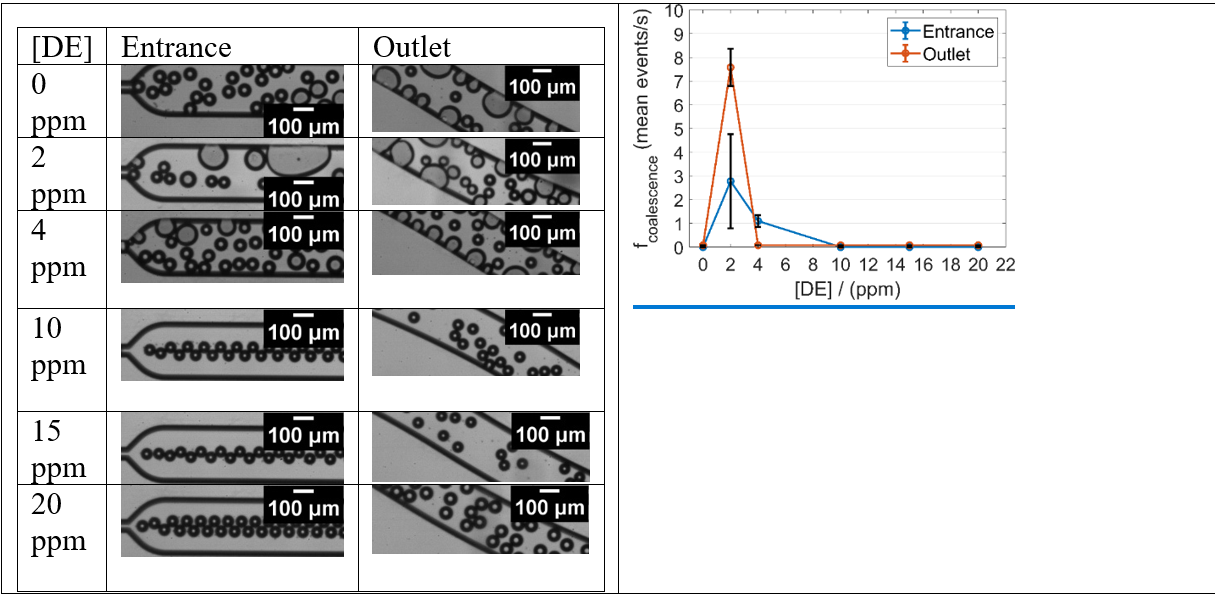
Our experiments tested a commercial water-in-oil demulsifier that was suspected to stabilise oil-in-water droplets. The results showed that a dosage of only 4–10 ppm was sufficient to completely stabilise the droplets, preventing coalescence altogether (Fig. 2).
Further experiments explored the influence of the fluids themselves. A reference system consisting of toluene and Milli-Q water showed a significantly higher tendency for droplets to coalesce. However, when either the oil phase or the water phase was replaced with fluids originating from oil field operations, the droplets became markedly more stable and less prone to coalescence (Fig. 3).
These findings suggest that trace amounts of chemicals present in field-derived fluids may play a critical role in stabilising oil droplets. Such traces may originate from production chemicals added upstream during oil production. Understanding these interactions is important for improving produced water treatment and ensuring more effective separation of oil from water.

Read the full research article by Aliti et al. here
Contact
Liridon Aliti Research coordinator for produced water management Danish Offshore Technology Centre Mobile: +45 20667912 lialit@dtu.dk
Simon Ivar Andersen Research Director and Professor, Chemical Impact of Offshore Energy Production Danish Offshore Technology Centre Mobile: 9351 0758 simand@dtu.dk